


Altre immagini
Altre immagini
Altre immagini
Altre immagini
Altre immagini
Altre immagini
Altre immagini
Altre immagini
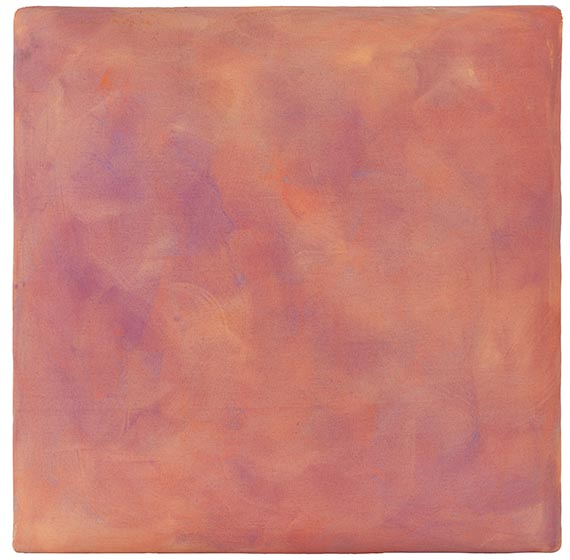
126000434
Gotthard Graubner
respiro, 1999/2000.
Acrylic and oil on canvas, over synthetic waddi...
Stima: € 350,000 / $ 406,000
Le informationi sulla commissione, le tasse e il diritto di seguito saranno disponibili quattro settimane prima dell´asta.
126000434
Gotthard Graubner
respiro, 1999/2000.
Acrylic and oil on canvas, over synthetic waddi...
Stima: € 350,000 / $ 406,000
Le informationi sulla commissione, le tasse e il diritto di seguito saranno disponibili quattro settimane prima dell´asta.
Gotthard Graubner
1930 - 2013
respiro. 1999/2000.
Acrylic and oil on canvas, over synthetic wadding on canvas.
Signed, dated, and with a direction arrow on the reverse. 202 x 202 x 20 cm (79.5 x 79.5 x 7.8 in). [JS].
• Huge & one-of-a-kind: To date, no “Color Space Body” of comparable size and vividness has been offered on the international auction market.
• Progressive & iconic: Graubner’s “Color Space Bodies” break the boundaries of classical painting and extend Rothko’s sensual color experiences into the third dimension.
• “respiro” (Italian: breath) – programmatic: “My paintings are not objects, but spaces in which color breathes” (Gotthard Graubner, 2010).
• Museum-quality: “Color Space Bodies” are part of international collections, including the Neue Nationalgalerie in Berlin, the Louisiana Museum in Humlebæk, Denmark, and the Harvard Art Museums in Cambridge.
• Spectacular & auratic: “Color Space Bodies” have been exhibited at, among others, documenta 6 (1977), the Venice Biennale (1982), the Kunsthalle Malmö (1983), and the MKM, Duisburg (2019/20).
Accompanied by a photog Certificate of Authenticity issued by Kitty Kemr, Gotthard Graubner Estate, Neuss, dated May 7, 2018. The work will be included into the forthcoming catalogue raisonné of the paintings.
PROVENANCE: Schönewald Fine Arts, Düsseldorf.
Private collection, Berlin (acquired from the above in 2019).
“The surfaces reveal open, often cloudy, dynamic, boundless structures; they are not solidified and ensure a constant exchange between the interior and exterior, much like regular breathing. Through color, the paintings unfold into a tangible sensory experience.”
Julia Mattern, “Wandlungen / Transformations,” in: Gotthard Graubner, Mit den Bildern atmen / Breathing with the Paintings, Cologne 2018, p. 22
“respiro”—Breathing Color: Graubner’s Iconic “Color Space Bodies” and the Transcendence of Painting
Auratical, mystical, and powerful—such is the effect of Gotthard Graubner’s monumental Color Space Body “respiro” (Italian for “breath”). Its title uniquely embodies Graubner’s artistic conviction that color possesses a life of its own, making it programmatic for this conceptually and aesthetically outstanding body of work. Graubner himself once defined his painting as follows: “My paintings are not objects, but spaces in which color breathes” (Gotthard Graubner, FAZ interview, 2010). Graubner’s Color Space Bodies, which protrude into space like cushions soaked in paint and delicate painterly strokes, rank among the most iconic works of the German postwar avant-garde. They made Graubner the inventor of a radically new type of painting that breaks away from the confines of classical panel painting and radically transcends our traditional idea of painting. These compositions create a three-dimensional experience that explores space contemplatively. At the same time, the separate layers of paint—some applied with large, broom-like brushes to create dynamic accents—create depth that lets viewers almost physically immerse themselves in the color.
Like a cloud of color, one is enveloped by the monumental Color Space Body of “respiro”, which is characterized by a warm, radiant interplay of orange and violet and in which not only the interior and exterior, the canvas, the paint, and the space, but ultimately also art and the viewer merge in a vibrant and organic way. These monumental worlds of color are utterly unique because of their captivating, auratic presence. Graubner appears to blend the gestural, dynamic surfaces of Jackson Pollock with the mystical color effects of Mark Rothko with ease, and by boldly transcending the two-dimensionality of the classical canvas painting, he has created something radically new.
Rothko / Graubner: Spiritual Color Fields and Graubner’s Pictorial Journey into the Third Dimension
One of the central artistic influences on the young Graubner was the American artist Mark Rothko and his large-scale Color Fields, which evoke spirituality and contemplation. In 1959, Rothko was represented at documenta II in Kassel—an exhibition that played a pivotal role in establishing Abstract Expressionism and Color Field painting in Europe—alongside his American contemporaries Jackson Pollock, Barnett Newman, and Willem de Kooning. At the time, Graubner was 29 and still a student at the Düsseldorf Academy of Fine Arts. The legendary documenta II—which turned the contemporary concept of art on its head and was widely discussed in the press—must also have been a profound artistic awakening for the young Graubner. The exhibition inspired him to a radical departure from all previous traditions in his art. “When the West German curators […] unpacked the crates delivered from New York shortly before the opening, the sight of the works turned their concept on its head. The visual impact of the 144 American artworks was overwhelming. Next to the expansive, space-filling, expressive canvases by Mark Rothko, Jackson Pollock, Franz Kline, William de Kooning, Sam Francis, and Helen Frankenthaler, the abstract works from Europe by Wols, Soulages, Dubuffet, Nay, Hartung, and Winter looked quiet and—to put it bluntly—old.” (quoted from: Marie Luise Knott, Abstrakter Expressionismus. Die documenta II und das Ende des Kalten Kunstkriegs, in: Ästhetik + Politik. Neuaufteilungen des Sinnlichen in der Kunst, ed. by M. Ott and H. Strauß, Schriftenreihe der HFBK Hamburg, Hamburg 2009).
1959, the year in which Graubner graduated from the academy, was thus a year of artistic upheaval that would thoroughly shake up the relatively staid German art world. And for Graubner, too, something completely new was about to begin, as his first “Cushion Paintings” – early versions of his later “Color Space Bodies” – emerged as early as the beginning of the 1960s. These works would eventually feature in documenta 4 in 1968, and he would also exhibit them at documenta 6 in Kassel in 1977.
While Graubner initially stretched his early cushion paintings over fine nylon fabric, he increasingly used sturdy canvas—which he backed with upholstery batting—for his later, bigger Color Space Bodies, as is the case with our composition “respiro”, which is imbued with an almost transcendent inner radiance. The application of paint—which creates a dreamy depth—is usually done with broom-like brushes on the canvas, whether placed on the floor or leaning against a wall. To enhance the complexity of individual color tones into an oscillating effect and an auratic presence, numerous drying processes and a special compositional sensitivity are required.
Because of the innovative aesthetics of his three-dimensional painting, Graubner’s Color Space Bodies are regarded as the key group in his oeuvre and, beyond that, as particularly bold and iconic creations of the European postwar avant-garde. sMajor museums and private collections worldwide own Graubner's paintings, including the Weißhaupt Collection, for which a spectacular museum building was constructed in 2008. On the occasion of its opening, The New York Times wrote: “What becomes visible at first glance is the collector’s preference for abstraction in all its forms: from the hard-edged geometries of Josef Albers to the meditative lyricism of Mark Rothko or Gotthard Graubner, in which Weishaupt sees a deep spirituality.” (David Galloway, “Ulm—Germany Becomes an Island of Art,” in The New York Times, January 1st, 2008). [JS]